Best Flooring for Kitchens: What Works Best

A kitchen floor earns its keep every single day. It handles spills, chair legs, dropped pans, pet traffic, rushed mornings, and weekend entertaining without asking for much in return. That is exactly why choosing the best flooring for kitchens is not just a style decision. It is a performance decision that affects how your space looks, feels, and functions for years.
For homeowners planning a renovation, the right flooring should support the way you actually live. A beautiful surface that stains easily or feels unforgiving underfoot can become a regret fast. On the other hand, a practical floor that ignores the rest of the design can flatten the entire room. The best result is always a balance of durability, maintenance, comfort, and visual impact.
How to choose the best flooring for kitchens
The strongest kitchen designs begin with priorities. If you cook constantly, have children or pets, or want a floor that hides everyday wear, your needs will be different from someone creating a showpiece kitchen for light use. Budget matters, of course, but so does the overall value of the investment.
Water resistance is the first filter. Kitchens are not full bathrooms, but they still deal with leaks, splashes, and frequent cleaning. Scratch resistance comes next, especially in busy households. Then there is comfort. Standing at an island for an hour feels very different on stone than it does on luxury vinyl or engineered wood.
Style should be considered in context. Flooring does not live alone. It interacts with cabinetry, countertops, backsplash selections, wall color, and natural light. In a designer-led renovation, flooring is one of the major visual anchors, so the right choice should support the full composition rather than compete with it.
The best flooring for kitchens depends on your lifestyle
There is no single material that wins for every home. The best flooring for kitchens depends on what you value most - low maintenance, warmth, resale appeal, luxury, or budget control. Here is how the most popular options compare in real homes.
Luxury vinyl plank
Luxury vinyl plank continues to be one of the most practical choices for today’s kitchens. It is water-resistant or waterproof depending on the product, comfortable underfoot, and far more design-forward than older generations of vinyl. Many newer lines convincingly mimic hardwood in color variation, plank scale, and surface texture.
Its strongest advantage is flexibility. It works well for families, pet owners, and homeowners who want a polished result without the price or upkeep of natural wood. It is also quieter and softer than tile, which matters in kitchens that open to living spaces.
The trade-off is perception and product quality. Not all luxury vinyl looks elevated, and cheaper options can read flat or artificial. In a high-end kitchen, material selection matters. The right plank, color, and installation pattern can look refined. The wrong one can cheapen the space.
Porcelain tile
Porcelain tile is one of the most durable kitchen flooring materials available. It performs beautifully against water, stains, and wear, and it offers exceptional design range. You can achieve a clean contemporary look, a natural stone feel, or even a wood-look finish with far less maintenance than actual wood.
This is often an excellent choice for homeowners who want longevity and a more architectural aesthetic. It also works especially well in warm climates like Atlanta, where a cooler floor can feel comfortable for much of the year.
Its downside is comfort. Tile is harder underfoot, and grout requires some maintenance over time. If the kitchen is the social center of the home, where people gather and linger, that harder feel can become noticeable. Proper installation is also critical. A beautiful tile floor only performs as well as the substrate and workmanship behind it.
Engineered hardwood
For homeowners who want warmth and a more seamless connection to adjacent living spaces, engineered hardwood can be a strong contender. It brings the richness of real wood while offering greater dimensional stability than solid hardwood. In open-concept homes, that continuity can make the entire main level feel larger and more cohesive.
Engineered hardwood is especially appealing in homes where design sophistication is a top priority. It softens a kitchen visually and adds a layered, custom feel that many clients love.
That said, it is still wood. Water is not its friend, and standing moisture can cause damage if spills are ignored. It also shows wear differently than tile or vinyl. For some homeowners, that natural patina is part of the charm. For others, it feels like too much maintenance in a high-traffic zone.
Natural stone
Natural stone brings undeniable presence. Marble, travertine, slate, and limestone can create a kitchen that feels tailored, elevated, and architecturally rich. If the goal is timeless luxury, stone has a visual depth that manufactured materials simply do not replicate perfectly.
This is not usually the first recommendation for a household focused on ease. Stone requires sealing, and some varieties are more porous or prone to etching than others. It can also be cold and hard underfoot. From a design standpoint, it is stunning. From a daily-living standpoint, it asks for commitment.
For the right client, that exchange is absolutely worth it. In a thoughtfully planned kitchen, natural stone can be part of an extraordinary finish palette.
Laminate flooring
Laminate has improved significantly in appearance, but it remains a more cautious kitchen recommendation. It can offer an attractive, budget-conscious look, and some newer products perform better against wear than many homeowners expect.
The concern is moisture. Even water-resistant laminate generally has limits, and kitchens test those limits. If cost control is the main driver and the product selection is strong, laminate may make sense in certain projects. But when clients want a longer-term, renovation-level result, there are usually better options.
What matters beyond the material itself
Material is only part of the decision. The finish, color, layout, and installation method can change the entire result.
Color deserves careful thought. Very dark floors show dust, crumbs, and scratches more quickly. Very light floors can make a kitchen feel airy and expansive, but some tones may reveal dirt or look too stark against warm cabinetry. Mid-tone woods and softly varied tiles often strike the best balance between beauty and livability.
Scale matters too. Wider planks can make a kitchen feel current and spacious. Larger-format tiles reduce grout lines and can create a cleaner visual field. Pattern matters as well. A straight lay feels classic, while herringbone or other layouts can add character if the rest of the design is restrained enough to support it.
Then there is the issue homeowners often underestimate - transitions. A kitchen floor should not feel like an isolated patchwork decision. In open plans, the relationship between kitchen flooring and adjacent spaces is essential. A well-designed renovation considers the full sightline, not just the footprint between the cabinets.
Which kitchen flooring is best for resale
If resale is part of the equation, the safest flooring choices are usually porcelain tile, quality engineered hardwood, and high-end luxury vinyl plank. These materials align well with what buyers want now: durability, easy upkeep, and a finish that feels current.
Porcelain tile tends to signal permanence and quality. Engineered hardwood appeals to buyers who want warmth and an upgraded feel. Luxury vinyl plank performs especially well when homeowners want style and practicality at a more approachable investment point.
The best resale move, however, is rarely just choosing the trendiest floor. It is choosing a floor that fits the caliber of the home and supports a cohesive kitchen design. Buyers respond to spaces that feel resolved.
Our design perspective on the best flooring for kitchens
In most kitchen remodels, we guide clients toward one of three paths. Luxury vinyl plank is often the smart choice for active households that want beauty without worry. Porcelain tile is ideal when durability and clean-lined sophistication lead the conversation. Engineered hardwood works best when continuity, warmth, and a more custom residential feel matter most.
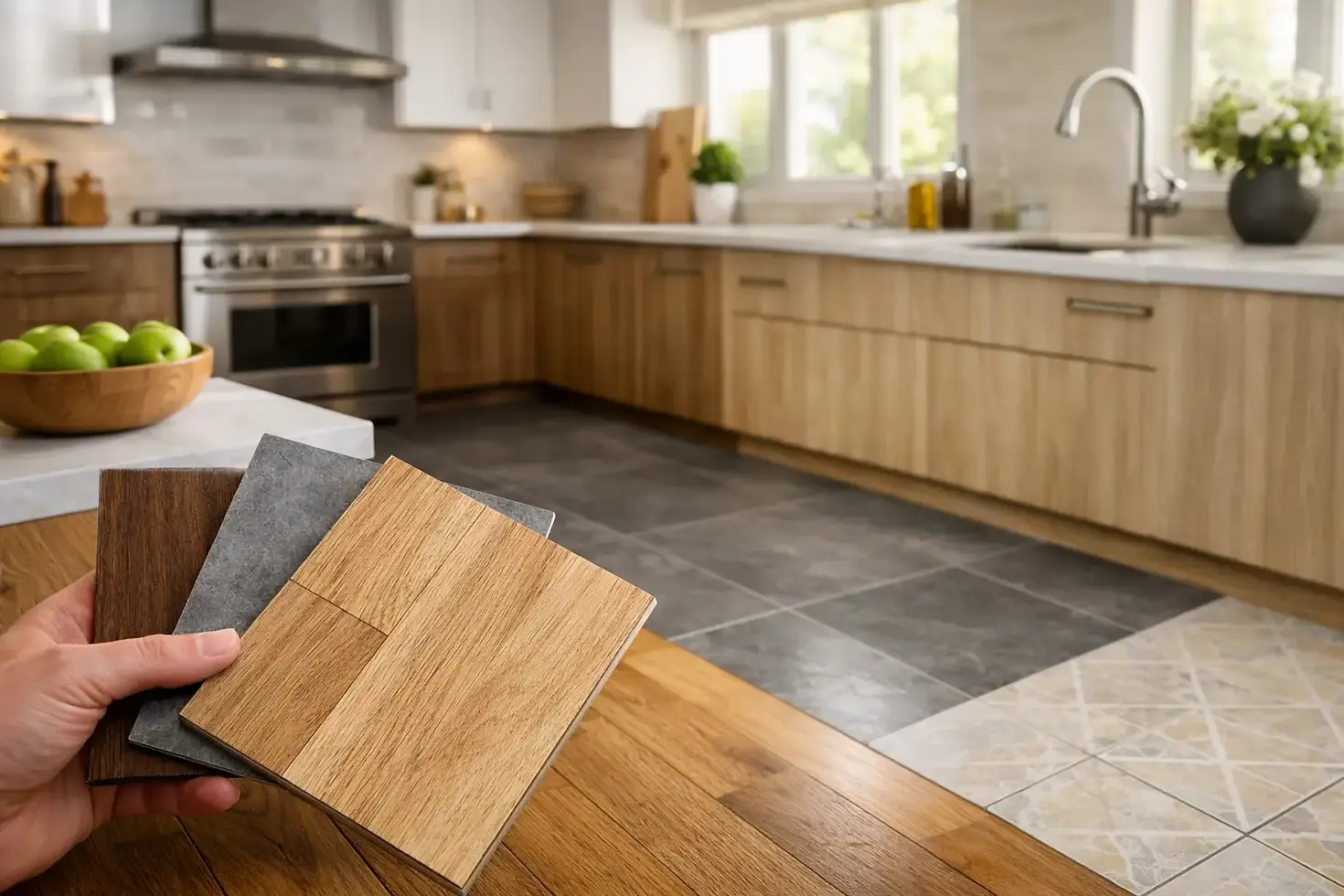
What we do not recommend is choosing based on a sample board alone. Flooring has to be evaluated against cabinetry finishes, countertop movement, paint color, lighting, and how the family uses the space. That is where a designer-led process changes the outcome. A floor may be beautiful on its own and still be the wrong selection for the kitchen as a whole.
At Interiors by Abraham, that is exactly why material selection is approached as part of the full transformation, not as a disconnected product decision. The strongest kitchens are built through coordination, not guesswork.
If you are deciding on the best flooring for kitchens, start with how you want your home to feel after the renovation is complete - easier to live in, more polished, and fully aligned with your lifestyle. The right floor should do all three quietly, beautifully, and every day.


Comments