Granite vs Quartz Countertops: Which Fits?
- Abraham Hernandez
- 12 minutes ago
- 6 min read

A countertop decision can change the entire feel of a kitchen faster than almost any other finish. When clients ask us about granite vs quartz countertops, they are rarely choosing between two simple slabs. They are choosing how they want the kitchen to live, perform, photograph, and age over time.
In a well-designed kitchen, countertops do more than cover cabinets. They set the tone for the room, influence maintenance habits, and affect how polished the final renovation feels. If you are investing in a kitchen update in Atlanta, the better question is not which material is best overall. It is which material is best for your home, your routines, and the level of care you want to give it.
Granite vs Quartz Countertops: The Real Difference
At a glance, granite and quartz can appear equally luxurious. Both deliver a premium look, both work beautifully in updated kitchens, and both can elevate resale appeal when selected well. The real difference is in composition, movement, maintenance, and predictability.
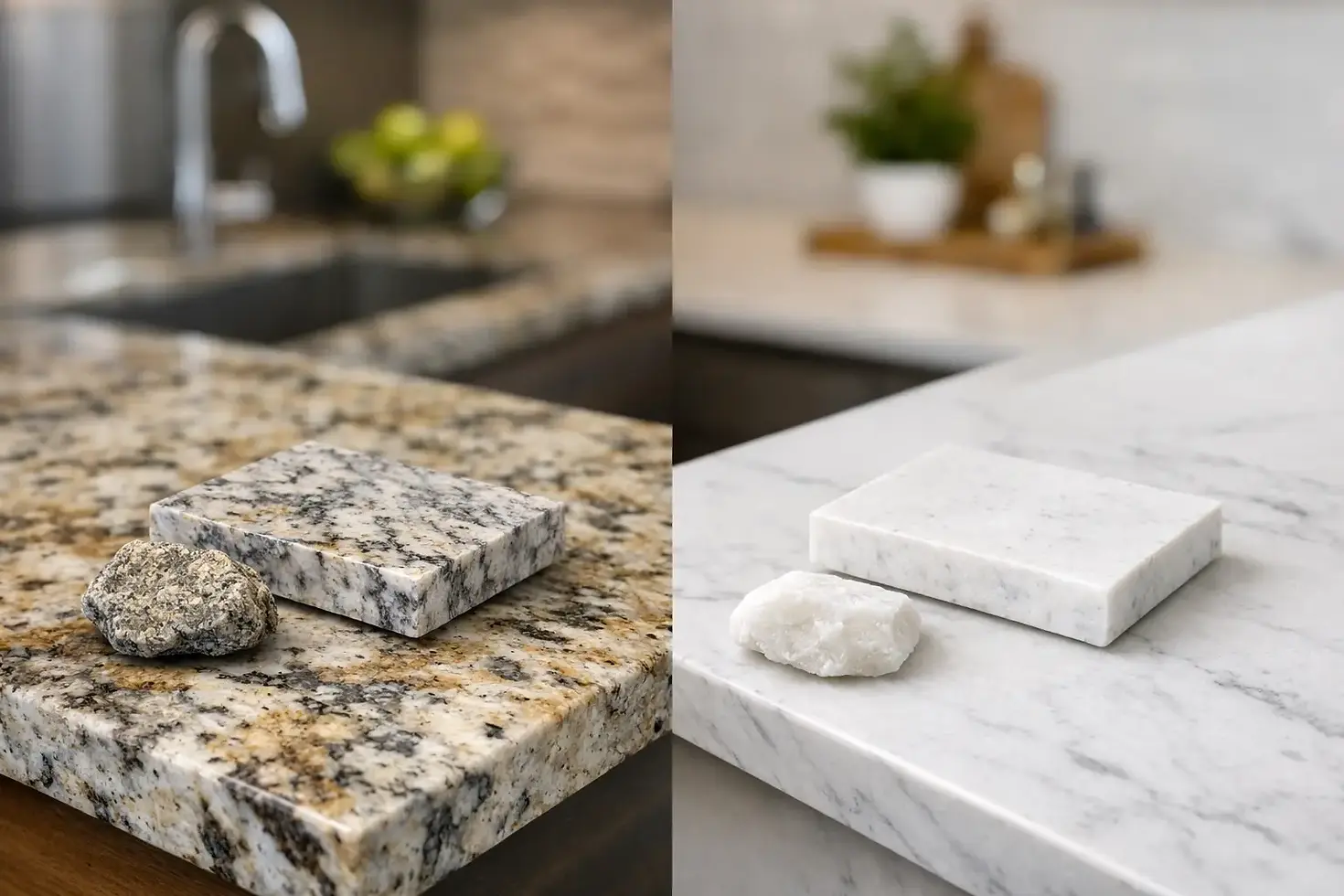
Granite is a natural stone cut from the earth, then polished and fabricated into slabs. Because it is natural, each piece has its own pattern, mineral variation, and movement. That is part of its appeal. Homeowners who want one-of-a-kind character often gravitate toward granite because no two slabs are exactly alike.
Quartz is an engineered surface made from crushed natural quartz combined with resins and pigments. The result is a more controlled look and more consistent patterning from slab to slab. For homeowners who want a refined finish with fewer surprises, quartz often feels easier to design around.
Neither choice is automatically more upscale. What matters is how the surface supports the cabinetry, backsplash, flooring, and overall design direction of the room.
Appearance and Design Impact
If your style leans organic, layered, and slightly more expressive, granite may be the stronger fit. Many granite slabs feature movement, veining, speckling, and color variation that bring depth to a kitchen. In larger kitchens, especially those with generous islands, that natural variation can create a custom, collected look that feels substantial and architecturally rich.
Quartz tends to appeal to homeowners who want a more edited and intentional aesthetic. It works especially well in transitional, contemporary, and clean-lined kitchens where visual consistency matters. If you want a bright white kitchen with a crisp waterfall island, or cabinetry and counters that feel calm rather than busy, quartz often delivers that look with more control.
This is where design guidance matters. A dramatic granite can become the showpiece of the room, but it can also compete with a bold backsplash or heavily patterned flooring. Quartz can create a beautifully quiet foundation, but in the wrong setting it may feel too uniform or flat. The best choice depends on what else is happening in the space.
Why slab selection matters more with granite
With granite, you are not just choosing a color name. You are choosing a specific slab. Two slabs labeled similarly can look very different in person. That means homeowners should expect to review actual stone when possible, especially if they care about veining direction, warm versus cool undertones, or how much movement will appear across an island.
Quartz is more standardized, which makes planning easier. If you are coordinating cabinetry paint, wall color, and tile selections during a full remodel, that consistency can remove stress from the process.
Durability in Daily Life
Both materials are strong performers, which is why both remain popular in luxury and mid-to-high-end kitchen remodels. Still, they handle daily life differently.
Granite is highly durable and heat resistant. Homeowners who cook often appreciate that natural stone can tolerate hot pots better than many manufactured surfaces. It is a tough material that stands up well to normal kitchen use.
Quartz is also durable, but it is not quite as heat-tolerant because of the resin content. It resists scratches and everyday wear very well, but direct heat can cause damage, so trivets and hot pads matter more.
For many busy households, both options hold up beautifully when used properly. The difference usually comes down to lifestyle habits. If you want a surface that better tolerates occasional kitchen abuse from avid cooking, granite has an edge. If your kitchen use is active but not hard on surfaces, quartz is more than capable.
Maintenance and Upkeep
This is often where the decision becomes much clearer.
Granite typically needs periodic sealing to help protect against staining and moisture absorption. The frequency depends on the specific stone and how heavily the kitchen is used. A well-maintained granite countertop can look beautiful for many years, but it does ask more of the homeowner.
Quartz is nonporous, so it does not require sealing. That makes it especially appealing for clients who want a polished kitchen without adding another maintenance item to their list. For busy professionals, families managing full schedules, or anyone who simply prefers low-maintenance materials, quartz is often the easier long-term choice.
That does not mean granite is difficult. It means granite rewards owners who are comfortable with a little stewardship. Quartz is the more convenient option if ease is high on your priority list.
Stain resistance and hygiene
Because quartz is nonporous, it tends to resist staining and bacterial absorption very well. That makes cleanup straightforward. Granite can also perform well, but only when properly sealed and maintained.
If you entertain often, have children who are hard on surfaces, or want a kitchen that feels effortlessly manageable, quartz usually wins this category.
Cost and Value
There is no universal rule that granite is cheaper or quartz is more expensive. Pricing for both depends on color, rarity, slab availability, edge detail, fabrication complexity, and installation conditions. Some premium granite slabs cost more than quartz, while some entry-level quartz products can be very competitive.
A better way to think about cost is total project value. Countertops should not be selected in isolation. The right surface has to support the cabinet style, hardware finish, sink selection, backsplash, and overall quality of the remodel. A countertop that saves money upfront but fights the design can weaken the final result.
For homeowners thinking about resale, both granite and quartz remain desirable in the Atlanta market. Quartz often appeals to buyers who like modern convenience and easy maintenance. Granite still carries strong visual appeal, especially when the slab is elegant and the kitchen design is cohesive.
Which Material Fits Your Kitchen Best?
If you love natural variation, want every surface in your home to feel unique, and appreciate authentic stone character, granite may be the right fit. It works especially well in kitchens where warmth, texture, and a more custom-feeling material palette are part of the vision.
If you want consistency, lower maintenance, and a cleaner design presentation, quartz is often the stronger investment. It is especially effective in kitchens designed for simplicity, brightness, and everyday ease.
There are also hybrid decision factors that matter. A homeowner planning a statement island may prefer the drama of granite. Someone remodeling a family kitchen for beauty and convenience may favor quartz. A home with warm wood tones may come alive with a richly veined natural slab, while painted cabinetry in a crisp, tailored palette may pair better with a softer quartz pattern.
This is why the best remodels are not built around trends. They are built around the client, the architecture, and how the space needs to function every day.
Granite vs Quartz Countertops in a Full Remodel
Countertops never stand alone in a finished kitchen. They sit beside cabinet profiles, under lighting, against backsplash material, and within the flow of the room. In a turnkey renovation, that bigger picture matters just as much as the material itself.
A quartz surface may look perfect in a sample, but feel too stark once paired with cool flooring and glossy tile. A granite slab may seem bold in the showroom, but become the element that gives the entire kitchen depth and distinction once installed. This is why material selection should be guided by the room as a whole, not by a single trend or isolated display.
For homeowners who want a kitchen that feels elevated, practical, and cohesive, the smartest move is to compare these materials through the lens of design, not just durability charts. At Interiors by Abraham, that is the difference between choosing a countertop and creating a kitchen that feels fully resolved.
The right surface should make your daily routine easier, your cabinetry look stronger, and your investment feel worth every detail. When that choice is made well, the kitchen does not just look finished. It feels like it was designed specifically for you.


Comments